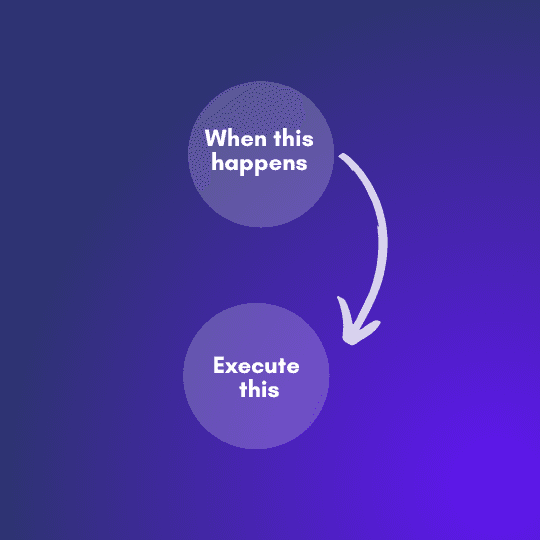
Map Your Current Workflows
Describe your ops processes in plain language. Arahi identifies the handoffs, approval chains, and SLAs that are costing the most time today.


Agents pick up orders from Shopify, NetSuite, or your ERP, validate inventory, route to the right warehouse, and update customers at each status change. No more ops analysts cross-checking spreadsheets at 6pm.
Monitor equipment telemetry and service logs to catch anomalies before they become downtime. Agents open tickets in your CMMS and schedule technicians against real-time availability.
Analyze demand signals, headcount, and SLA targets to recommend staffing and material allocation. Agents rebalance schedules when volumes spike or a supplier slips.
Automate RFQs, compare vendor responses against your rubric, and route approvals to the right signer. Agents also track PO status and chase late confirmations without prompting.
When a KPI breaches its threshold, agents compile context from monitoring tools, open the incident channel, and page the on-call owner with a clear summary. Resolution times drop from hours to minutes.
Continuously pull logs, approvals, and exceptions into audit-ready reports. Agents flag process deviations in real time so you catch control failures before the audit does.
less manual coordination time
Reclaimed from status chasing, ticket routing, and data reconciliation.
faster incident resolution
Agents triage and escalate before humans even see the page.
process monitoring
KPI breaches and SLA risks surfaced the moment they happen.
audit trail coverage
Every decision logged with full context for compliance review.
Visibility is scattered across tools and Slack threads, and small problems compound into SLA misses before you notice.
A single feed of agent-run workflows with live KPIs, anomaly alerts, and a clear record of what was decided and why.
Half your week is status meetings and chasing teams for updates on routine orders, tickets, and escalations.
Agents push updates automatically, route exceptions to the right owner, and free you to spend time on process design instead of babysitting.
Vendor delays and stockouts surface too late, leaving you firefighting instead of planning ahead.
Predictive agents flag at-risk shipments, auto-reorder against thresholds, and draft mitigation plans you can approve with one click.
Describe your ops processes in plain language. Arahi identifies the handoffs, approval chains, and SLAs that are costing the most time today.

Plug in your ERP, CMMS, ticketing, and monitoring tools from our 1,500+ integrations — no custom development, no data migration.

Deploy agents against one or two high-volume workflows first (like order routing or incident triage). Most teams see results in the first week.
Agents learn from exceptions, feedback, and resolution patterns. Expand them across teams and geographies as confidence grows.
Connects to NetSuite, SAP, Oracle, Fiix, UpKeep, and your home-grown tools without ripping out existing systems.
When ops makes a manual correction, agents incorporate the logic so similar cases resolve automatically next time.
Agents don't just ping — they compute risk against SLA and surface the right severity to the right team.
Operational data is never used to train public models; SOC 2-aligned controls and row-level permissions throughout.
Run the same workflows across warehouses, plants, or regions with site-specific rules and reporting.
Every agent action is logged with inputs, reasoning, and outputs — ready for internal audit or ISO review.
An e-commerce order fails inventory allocation at fulfillment.
Agent pulls the order details, SKU status, and customer tier from the ERP.
Checks alternate warehouses and substitute SKUs against business rules.
If a valid alternative exists, re-routes the order and notifies the customer.
If not, escalates to the ops lead with full context and a proposed action.
90%+ of exceptions resolved without an ops analyst touching them, and the remaining 10% arrive pre-triaged.
A machine's vibration or temperature telemetry trends outside normal range.
Agent correlates the signal with recent service history and known failure modes.
Opens a ticket in the CMMS with severity and recommended parts.
Checks technician availability and schedules the visit.
Notifies the plant manager and follows up until the ticket closes.
Unplanned downtime drops as issues are caught days before failure, and MTTR shrinks.

Keep your processes lean and agile with AI-driven automation built for ops teams.
Arahi AI connects to 1,500+ apps including CRMs, marketing tools, support platforms, and more — so your operations solutions workflows plug into the tools your team already uses.
AI agents automate recurring tasks like order processing, inventory monitoring, and resource scheduling — while providing predictive insights to prevent bottlenecks. They analyze data trends in real time, flag anomalies, and optimize workflows across teams, reducing operational costs and improving throughput without adding headcount.
No coding is required. Arahi AI provides a visual workflow builder where you can configure process automations, set up monitoring rules, and connect your operations tools using drag-and-drop — no developer or IT team needed.
Most operations teams have their first automated workflow running within a day. Start with a high-volume repetitive task like order routing or status updates, then expand to predictive maintenance, resource planning, and cross-team coordination as you see results.
No — they replace the grunt work, not the judgment. Agents take over repetitive tasks (status updates, ticket routing, data reconciliation) so your team can focus on process design, vendor relationships, and strategic planning. Most customers redeploy headcount to higher-value work rather than reduce it.
Arahi AI is SOC 2-aligned and enforces row-level permissions, SSO, and audit logging by default. Agents only access the systems and data you explicitly grant, and every action is logged with inputs and outputs. Your operational data is never used to train public models.
Every agent decision is logged with its reasoning, so you can trace exactly what happened. You can define approval gates for high-value actions, set rollback rules, and have agents escalate to a human whenever they're below a confidence threshold. Corrections are incorporated back into the agent's behavior.
Arahi connects to 1,500+ apps including NetSuite, SAP, Oracle, Microsoft Dynamics, Fiix, UpKeep, ServiceNow, Jira, Slack, Microsoft Teams, and most major CMMS, WMS, and ERP systems. If you have an internal tool with an API, agents can use that too.
Explore guides and insights on this topic

Manual compliance can't keep up with changing regulations. See how AI compliance agents automate audits, monitoring, and reporting.

7 proven AI strategies to automate customer onboarding. Reduce drop-off, personalize each journey, and scale without adding headcount.

The best no-code AI tools for process automation: 12 platforms for lead gen, support, onboarding and ops, no code needed. Features and pricing compared.